What is Gait?
- A gait is the pattern of limb movement an animal uses to move. It describes the sequence and timing of how the legs touch the ground and lift off during locomotion.
Common quadruped gaits are walk, trot, pace, canter, gallop.

The Horse In Motion by Muybridge 1878
What is Cadence?
Cadence is the number of steps (or strides) taken per unit of time.
- Usually measured as steps per minute.
- In quadrupeds, it can also refer to stride frequency (how often a full stride repeats).
Simple idea: Cadence = how fast the legs are cycling
What is Stride?
- a stride is defined as one full cycle of motion, beginning when a foot touches the ground and ending when that same foot returns tot he same position.

Protraction and Retraction
- Forward and backward movement of a limb relative to the body.
Protraction
- Protraction means moving a limb forward. During locomotion, this happens in the swing phase when the leg lifts from the ground and moves in front of the body for the next ground contact.
Retraction
- Retraction means moving a limb backward. This happens mainly during the stance phase when the foot is on the ground and the body moves forward over it.

Protraction in Red – Retraction in blue
Optimal Foraging Theory
This is one of the central ideas in ecology about how animals choose movement and feeding behaviours to maximize energy gain and minimize energy cost.
- Predicts how animals decide when and where to search for food.
- Balances the energy gained from food against the energy spent searching for it.
- Used to explain why some animals travel far for high-calorie food while others stick to small, predictable areas.
This theory has been applied to many species, from insects to mammals to birds.
Energy-Efficient Locomotion in Animals
Biomechanists and physiologists have studied how different animals move in ways that reduce energy expenditure:
Walking and Running
- Animals have evolved specific limb postures and gaits that reduce metabolic cost.
- For example, walking gaits in large mammals tend to be more energy efficient at low speeds, while running gaits are better at higher speeds.
- Many animals naturally switch gait at speeds that minimize their energy use.
Gliding and Soaring in Birds
- Some birds use air currents instead of flapping (e.g., albatrosses), dramatically reducing the energy needed for long flights.
Fish and Swimming
- Fish use body shapes and schooling behaviours that reduce drag and energy use.
Allometry and Metabolic Scaling
Research shows that body size influences energy use and optimal movement patterns:
- Smaller animals have relatively higher metabolic rates per unit body mass.
- Larger animals use slower, more efficient strides.
- This affects how animals schedule their activity during the day.
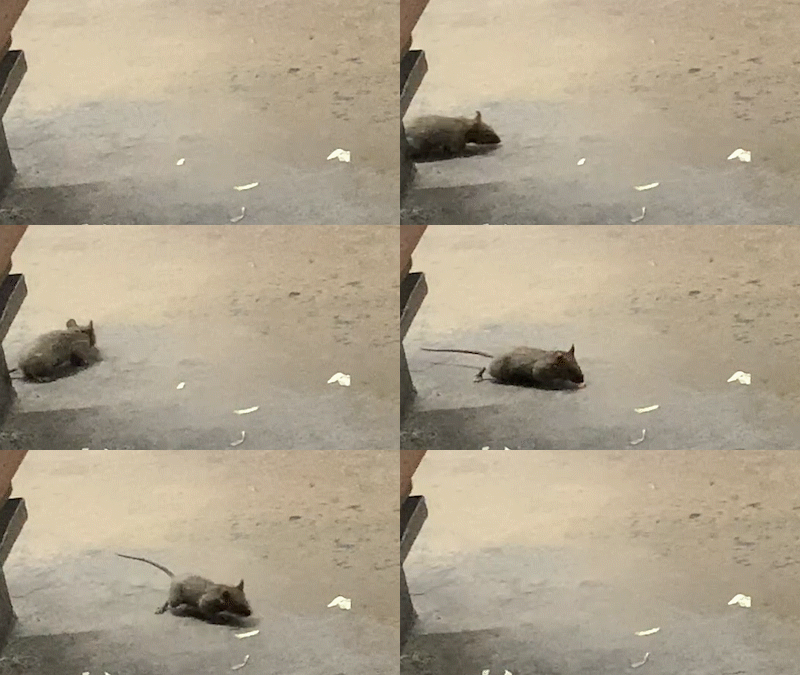
High rate metabolism example
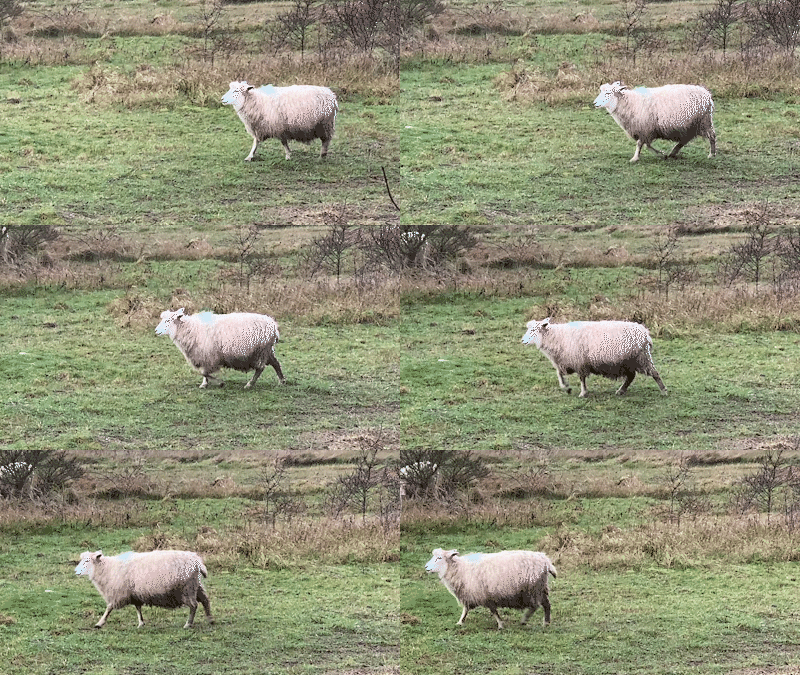
low rate metabolism example